RSECon26 – A warm welcome to the RSE community
This year, I found myself in an interesting place career-wise – my previous line manager had left, and I was re-allocated to the local Research Software Engineering (RSE) group at the University of Glasgow School of Molecular, Veterinary and Life Sciences Shared Research Facilities. I am personally a data scientist, so this move left me questioning how best I could fit into this new community. It was then my manager recommended RSECon26, as a great way to get involved.
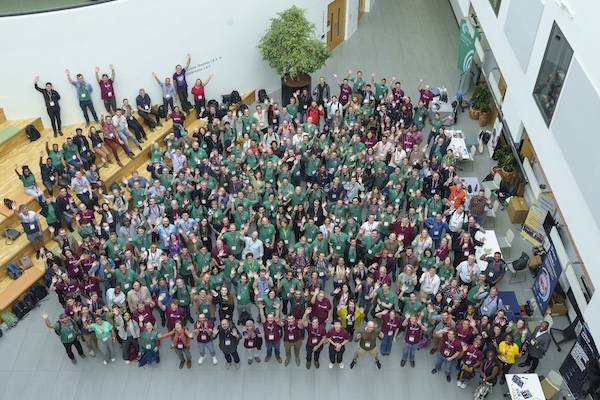
Credit: Society of Research Software Engineering/Dominic Lipinski
This seemed like the perfect opportunity for me to get to grips with the world of RSE, and I was keen to attend. However, internal funding was not available, and other funding sources were reticent to send someone not technically an RSE to RSECon, particularly within the same country. CHARTED were able to understand the value of this conference to me, and funded my attendance at the event.
Running from the 9th to the 11th of September, RSECon26 was the 10th anniversary of the international meeting, hosted by the Society of Research Software Engineering in Sheffield. Here, I was able to hear talks from prominent figures throughout the growing discipline, and meet a number of potential new collaborators.
More useful to me than the science and the professional connections, though, was the strong focus on RSE as a profession, both in the present and the way things are set to change over the next few years. One of the key themes of this conference was “RSEs as part of the research journey”, and indeed much of the conference content focused on the way RSE intersects with more traditional researche. Many sessions were dedicated to how RSE work can operate in the age of Generative AI and how we should move from thinking about writing software to thinking about reviewing software. Moreover, there was a strong emphasis on the role of RSEs as teachers and trainers, and how we can offer our professional experience to our communities.
I found this approach to the conference to be extremely helpful for my own development. Since RSECon, I feel I have a much clearer idea of how I fit in to my University as a part of RSE, and have started to think about new strategies for providing training to colleagues in research. Indeed, discussions have already started about how we can adapt existing training materials to provide opportunities to learn about responsible use of Generative AI.
On top of that, I’ve returned to Glasgow with a wealth of perspectives to bring to our RSE group. Based on the opinions of hundreds of like- minded colleagues, and the research they’ve carried out into how RSEs can best support research moving forwards, I hope to be an advocate for a thoughtful approach, emphasising our skills as Research Software experts, and developing the role of RSE within the Shared Research Facilities and the University of Glasgow as a whole.