<?xml version="1.0" encoding="utf-8"?><feed xmlns="http://www.w3.org/2005/Atom" ><generator uri="https://jekyllrb.com/" version="3.10.0">Jekyll</generator><link href="https://drtp-skills.ac.uk/feed.xml" rel="self" type="application/atom+xml" /><link href="https://drtp-skills.ac.uk/" rel="alternate" type="text/html" /><updated>2026-10-02T09:50:04+00:00</updated><id>https://drtp-skills.ac.uk/feed.xml</id><title type="html">dRTP Skills</title><subtitle>Research Technical Professionals (RTPs) are an integral part of the modern process of scientific discovery. The goal of this website is to facilitate the process of discovery and development of digital research technical skills. </subtitle><entry><title type="html">RSECon26 – A warm welcome to the RSE community</title><link href="https://drtp-skills.ac.uk/blog/2026/09/25/charted_fund_4_Gillen/" rel="alternate" type="text/html" title="RSECon26 – A warm welcome to the RSE community" /><published>2026-09-25T00:00:00+00:00</published><updated>2026-09-25T00:00:00+00:00</updated><id>https://drtp-skills.ac.uk/blog/2026/09/25/charted_fund_4_Gillen</id><content type="html" xml:base="https://drtp-skills.ac.uk/blog/2026/09/25/charted_fund_4_Gillen/"><![CDATA[<p>This year, I found myself in an interesting place career-wise – my previous line manager had left, and I was re-allocated to the local Research Software Engineering (RSE) group at the University of Glasgow School of Molecular, Veterinary and Life Sciences Shared Research Facilities. I am personally a data scientist, so this move left me questioning how best I could fit into this new community. It was then my manager recommended RSECon26, as a great way to get involved.</p>

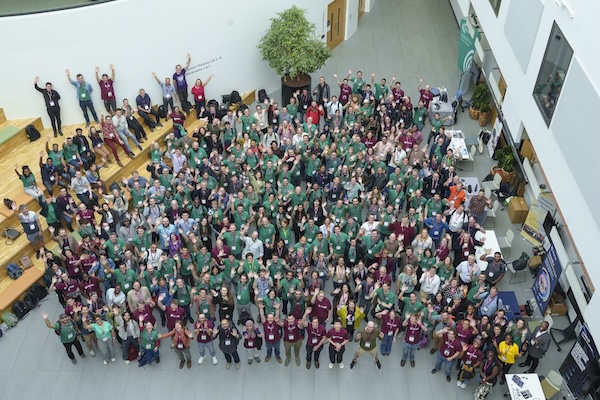
<p><img src="/assets/images/blogpost-rsecon26.jpg" alt="Photograph of the RSECon26 delegates" title="The wonderful RSEcon26 community!" /></p>

<p><small><em>Credit: Society of Research Software Engineering/Dominic Lipinski</em></small></p>

<p>This seemed like the perfect opportunity for me to get to grips with the world of RSE, and I was keen to attend. However, internal funding was not available, and other funding sources were reticent to send someone not technically an RSE to RSECon, particularly within the same country. CHARTED were able to understand the value of this conference to me, and funded my attendance at the event.</p>

<p>Running from the 9th to the 11th of September, RSECon26 was the 10th anniversary of the international meeting, hosted by the Society of Research Software Engineering in Sheffield. Here, I was able to hear talks from prominent figures throughout the growing discipline, and meet a number of potential new collaborators.</p>

<p>More useful to me than the science and the professional connections, though, was the strong focus on RSE as a profession, both in the present and the way things are set to change over the next few years. One of the key themes of this conference was “RSEs as part of the research journey”, and indeed much of the conference content focused on the way RSE intersects with more traditional researche. Many sessions were dedicated to how RSE work can operate in the age of Generative AI and how we should move from thinking about writing software to thinking about reviewing software. Moreover, there was a strong emphasis on the role of RSEs as teachers and trainers, and how we can offer our professional experience to our communities.</p>

<p>I found this approach to the conference to be extremely helpful for my own development. Since RSECon, I feel I have a much clearer idea of how I fit in to my University as a part of RSE, and have started to think about new strategies for providing training to colleagues in research. Indeed, discussions have already started about how we can adapt existing training materials to provide opportunities to learn about responsible use of Generative AI.</p>

<p>On top of that, I’ve returned to Glasgow with a wealth of perspectives to bring to our RSE group. Based on the opinions of hundreds of like-
minded colleagues, and the research they’ve carried out into how RSEs can best support research moving forwards, I hope to be an advocate for a thoughtful approach, emphasising our skills as Research Software experts, and developing the role of RSE within the Shared Research Facilities and the University of Glasgow as a whole.</p>]]></content><author><name>Andrew Gillen</name></author><summary type="html"><![CDATA[This year, I found myself in an interesting place career-wise – my previous line manager had left, and I was re-allocated to the local Research Software Engineering (RSE) group at the University of Glasgow School of Molecular, Veterinary and Life Sciences Shared Research Facilities. I am personally a data scientist, so this move left me questioning how best I could fit into this new community. It was then my manager recommended RSECon26, as a great way to get involved.]]></summary></entry><entry><title type="html">What tools do we need to help navigate the training landscape?</title><link href="https://drtp-skills.ac.uk/blog/2025/12/03/tools-for-navigating-training-landscape/" rel="alternate" type="text/html" title="What tools do we need to help navigate the training landscape?" /><published>2025-12-03T00:00:00+00:00</published><updated>2025-12-03T00:00:00+00:00</updated><id>https://drtp-skills.ac.uk/blog/2025/12/03/tools-for-navigating-training-landscape</id><content type="html" xml:base="https://drtp-skills.ac.uk/blog/2025/12/03/tools-for-navigating-training-landscape/"><![CDATA[<p>The CHARTED project aims to connect existing or potential digital research technical professionals (dRTPs) in the UK to training opportunities, skills, and roles to support their professional development. One strand of that is focused on how to provide tools and frameworks that can help learners find the training that is right for their needs, including by navigating training between different providers. Recently, we held a discussion with some of the organisations providing training material or related tools to dRTP learners:</p>

<ul>
  <li><a href="https://coderefinery.org/">Code Refinery</a></li>
  <li><a href="https://direct-framework.github.io/digital-research-competencies-framework/">DIgital REsearch CompeTencies (DIRECT) Framework</a></li>
  <li><a href="https://www.evitahpc.eu/">EVITA - the EuroHPC Virtual Training Academy</a></li>
  <li><a href="https://www.hpc-certification.org/">HPC Certification Forum</a></li>
  <li><a href="https://materialscommons.eu/">MaterialsCommons4EU</a></li>
  <li><a href="https://carpentries.org/">The Carpentries</a></li>
</ul>

<p>The aim of the conversation was to discuss ideas for tools that could be developed to help learners and training content creators, and the tasks that would be needed to support those tools.</p>

<p>Some of the tools that were identified included providing ways for learners to assess their skills and align themselves with existing skill or role pathways. For example, this could be through the use of pre-defined competencies, or by specifying the type of job they have (or want). From there, the learner could be linked to training suitable for developing those specific areas, or relevant to that job. Other suggestions included more tools for learners to find training such as through repositories, diagnostic questionnaires to identify what they need to know, and recommendations from other learners. It was also agreed that better support to help learners put together training from different organisations would be beneficial. For example, if a learner had identified a course they wanted to take but did not have the required prerequisite knowledge, they could be directed to other courses that could provide that knowledge, regardless of the organisation that offered them.</p>

<p>There are existing tools that address some of these aims, and we’ve put together a list of current resources at the end of the article. However, it was clear there was further work that could be done to truly help learners navigate the existing training, and to better support and connect people developing and delivering training content.</p>

<p>In order to do so however, the conversation identified more work that would be needed to provide useful metadata about the training that’s provided, and ideas for tools that could help providers to do so. These could be tools to help training creators to specify learning outcomes and prerequisites in a more standardised way, to support interoperability between different providers, and tools to help specify those as machine-readable metadata. Supporting learners to make better use of training will involve making new or existing training more FAIR (Findable, Accessible, Interoperable, Reusable), and that’s a key aim of the CHARTED project. Tools that could help training creators to assess the FAIRness of their material and provide actionable suggestions to improve it, as has been done for FAIR data and FAIR software, could greatly help with this aim.</p>

<p>The outcome of this conversation, along with other planned consultations, will be used to design the funding calls that CHARTED will be releasing through its Flexible fund. About a third of the total fund will be dedicated to support creating some of these proposed tools.</p>

<p>Improving the training ecosystem can only happen when different groups come together and CHARTED aims to continue to facilitate that. We’ll be continuing to hold discussions with training providers and learners, including a breakout session at Computing Insight UK 2025.  The <em>“FAIRifying the dRTP Training Ecosystem”</em> session will be held on Thursday 4th December at 11:30-13:00 in the Exchange Rooms 9-11 at the Manchester Convention Centre. Please come and join us!</p>

<p>If you are creating or providing training to dRTPs, or are interested in doing so, and would like to discuss ideas please get in touch. Anyone can also join the CHARTED mailing list to be notified of funding calls and other developments in CHARTED. Please also <a href="https://mailchi.mp/aec876699acd/subscribe-to-charted">sign up</a> if you are interested in being a reviewer for the applications.</p>

<p>CHARTED is funded by the UKRI Digital Research Infrastructure Programme as part of the digital Research Technical Professional Skills NetworkPlus Call.</p>

<p>Existing projects or resources that were mentioned in the call include:</p>

<ul>
  <li><a href="https://carpentries-incubator.github.io/better-research-software/09-wrap-up.html#fair-software-is-better-software">Carpentries: Building better research software training</a></li>
  <li><a href="carpentries.github.io/lesson-development-training">Carpentries: Collaborative lesson development training</a></li>
  <li><a href="https://github.com/carpentriesmagic">CarpentriesMagic</a></li>
  <li><a href="https://digital-research.academy">Digital Research Academy</a></li>
  <li><a href="direct-framework.github.io/digital-research-competencies-framework">DIRECT Framework</a></li>
  <li><a href="https://elixir-europe-training.github.io/ELIXIR-TrP-FAIR-training-handbook/">ELIXIR FAIR training handbook</a></li>
  <li><a href="https://tess.elixir-europe.org">ELIXIR TeSS</a></li>
  <li><a href="https://everse.software/RSQKit">EVERSE</a></li>
  <li><a href="https://aoe.fi/">Finnish National Agency for Education Library of Open Educational Resources</a></li>
  <li><a href="https://forrt.org">FORRT</a></li>
  <li><a href="https://glittr.org">Glitter</a></li>
  <li><a href="https://hpc-portal.eu/training">HPC in Europe Portal</a></li>
  <li><a href="https://hsf-training.org/training-center">HSF training center</a></li>
  <li><a href="https://we-are-ols.org/openseeds/library.html">OLS Video library</a></li>
  <li><a href="https://www.researchsoft.org/forums/stars-forum">ReSA Skills and Training for Research Software (STaRS) Forum</a></li>
  <li><a href="https://book.the-turing-way.org/community-handbook/pathways">Turing Way pathways</a></li>
</ul>]]></content><author><name>Steven Carlysle-Davies</name></author><summary type="html"><![CDATA[The CHARTED project aims to connect existing or potential digital research technical professionals (dRTPs) in the UK to training opportunities, skills, and roles to support their professional development. One strand of that is focused on how to provide tools and frameworks that can help learners find the training that is right for their needs, including by navigating training between different providers. Recently, we held a discussion with some of the organisations providing training material or related tools to dRTP learners:]]></summary></entry></feed>